

Search: heat
2860 Results
2860 Results

Idaho Ag Today
Idaho passes Washington in farm receipts for first time.
Idaho Ag Today
Ken Bruegeman and Eric Hasselstrom, two farmers & ranchers from North Central Idaho discuss how the drought has affected them.
Southeast Regional Ag News
Four regional universities are among five institutions sharing $465,000 for industry-focused research.
Idaho Ag Today
For Idaho, Winter 2025/2026 was the second warmest winter since 1896, with record-low snowpack and warm temperatures.

The Agribusiness Update
Wheat futures remain volatile as traders weigh continued disruptions to Black Sea grain exports, and a bill requiring AM radio in new vehicles is headed for a House vote.
The Agribusiness Update
Ag technology took center stage at a field day last month as a dozen developers showed off “smart” weeders, autonomous bird hazers and an autonomous lettuce harvester, and China purchased about 1 million metric tons of U.S. soybeans last week, providing a boost to American growers.
The Agribusiness Update
Florida lawmakers are urging the Trump administration to address sharply higher sulfur prices that threaten domestic phosphate fertilizer production and increase costs, and China purchased about 1 million metric tons of U.S. soybeans last week, providing a boost to American growers.
The Agribusiness Update
Warfare between Russia and Ukraine is elevating uncertainty in global wheat markets as attacks threaten agricultural infrastructure around the Black Sea, and Farmers are reporting difficulty obtaining federal conservation assistance after substantial staffing reductions at USDA's Natural Resources Conservation Service.
The Agribusiness Update
The U.S.–Canada trade dispute is creating new concerns for American farmers as retaliatory tariffs and import restrictions kick in, and the 2026 wheat harvest continues to make progress, with hard red winter wheat now complete and soft white wheat nearing the finish line.
Idaho Ag Today
Constellation announces $100 million investment that includes Idaho farmers.
Idaho Ag Today
Young Farmers and Ranchers District Chairs Riata & Sterling Meldrum tell us about what being a YF&R member means to them.
Idaho Ag Today
Lower domestic wheat production forecast as expected, led to tightening of USDA's U.S. wheat balance sheet in August.
Line on Agriculture
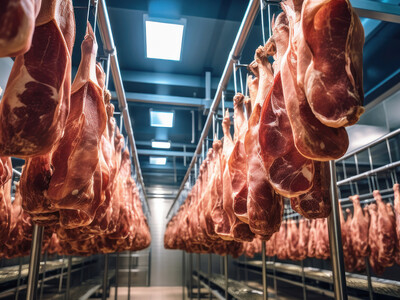
Tyson Foods' closure of a beef processing facility in Illinois, capable of handling 3,000 cattle daily, has disrupted the supply chain. The World Agricultural Outlook Board has reduced the EU's wheat production estimate by 1.8 million tons due to extreme summer heat, impacting the yield and bringing the forecast to 134.2 million tons, down 11 million tons from last year. A potential historic El Niño event in the U.S., which could alter winter weather patterns.
The Agribusiness Update
U.S. agricultural tractor sales dropped nearly 11% in July compared to last year, with combine sales down more than 5%, and Hard Red Winter wheat harvest is nearly complete, with less than 10% remaining, and the crop continues to grade U.S. No. 1.
Idaho Ag Today
Preparing now for what may be a long summer for livestock will protect herds from potential heat stress and related issues.
Line on Agriculture
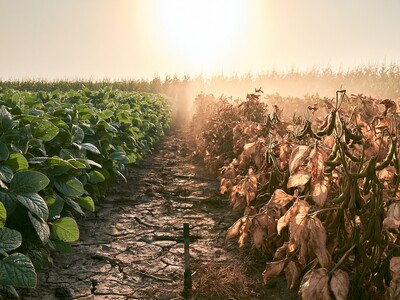
AccuWeather's Paul Pastelak discusses the impact of current heat conditions on crops, noting that while spring wheat is performing better than expected, it will still yield less than last year due to hot weather and less precipitation in the Dakotas and Montana. Corn yields are also expected to be lower due to reduced planting.
The House has approved a $95 billion budget resolution, including up to $12 billion in aid for farmers facing financial challenges, which passed on a party-line vot
Read More
Line on Agriculture
The U.S. wheat harvest has been severely impacted by extreme heat and dry conditions, as reported by the National Agricultural Statistics Service. The July crop production report forecasts a yield of 46.7 bushels per acre, a slight decrease from last month and a significant 14.9% drop from the previous year. Production is expected to be 990 million bushels, the lowest since 1963.
California Ag Today
New research suggests winter crops may offer California farmers an alternative to fallowing land while adapting to groundwater restrictions.