
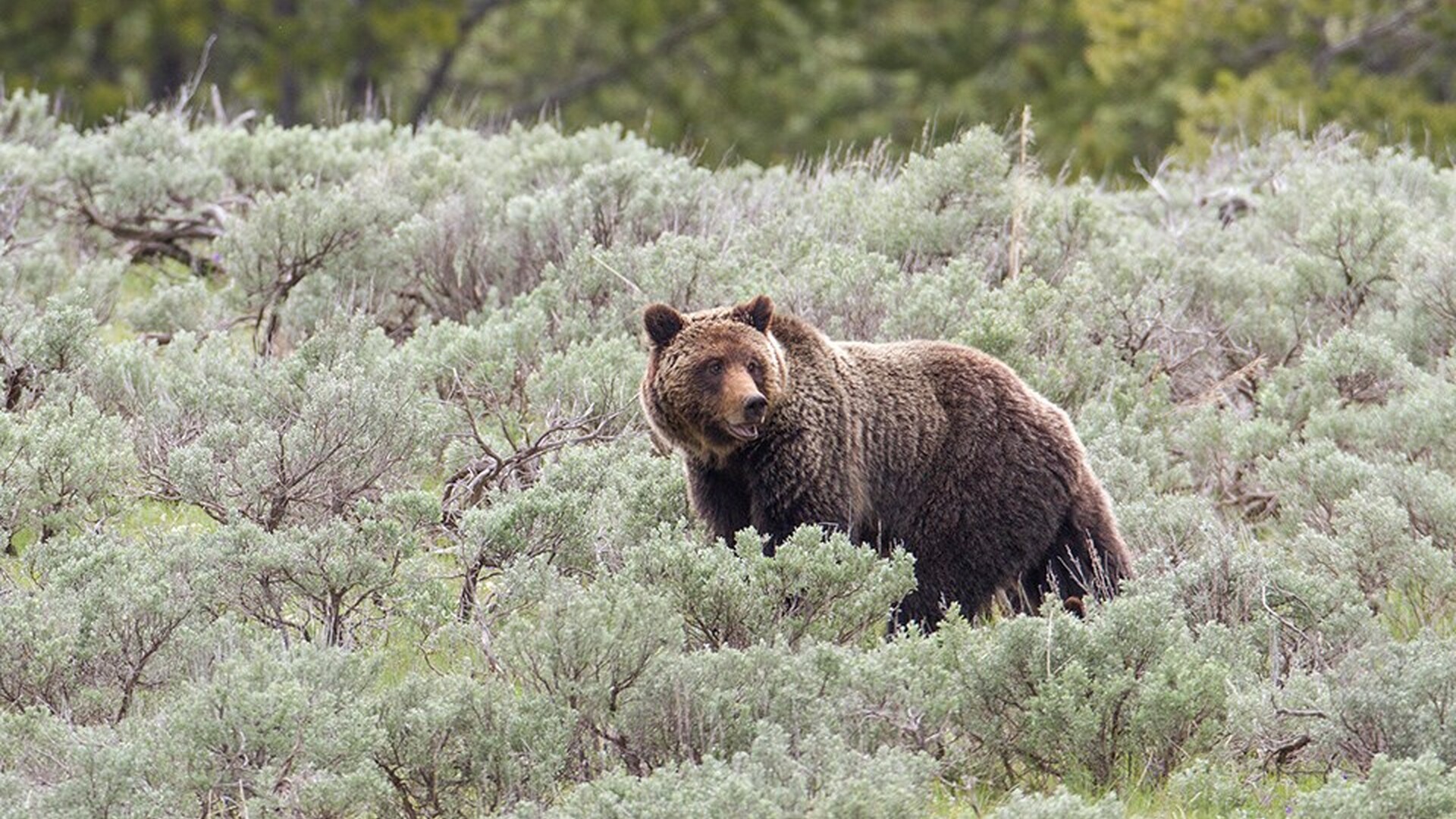
Trump Administration Returns Management of Grizzly Bears to the West
The Department of the Interior has announced a revised proposal to increase management flexibility for grizzly bears in areas where the species has met, and in many cases exceeded, federal recovery benchmarks. The updated management proposal ensures the Endangered Species Act is being used as Congress intended while continuing to support the species' long-term conservation. Secretary of the Interior Doug Burgum was joined by Montana Governor Greg Gianforte, Wyoming Governor Mark Gordon, Idaho Governor Brad Little and Fish and Wildlife Director Brian Nesvik for the announcement.
The revised proposal builds on decades of conservation progress led by states, tribes, federal agencies, private landowners and local communities. By providing additional management flexibility in areas where conservation benchmarks and population objectives have been achieved, the proposal would help wildlife managers address conflicts and public safety concerns while continuing to support the long-term conservation of grizzly bears.
“The science is more than clear: grizzly bears have recovered and far exceeded every federal recovery benchmarks. Today, Interior is returning conservation leadership to the Western states instead of Washington bureaucrats,” said Secretary of the Interior Doug Burgum. “Under the leadership of President Trump, we’re following the science, upholding the law and ending politics masquerading as conservation.”
The revised proposal supports the Trump administration's goal of reducing unnecessary regulatory complexity, empowering states and tribes and ensuring wildlife management decisions are practical, science-based and effective on the ground. The rule does not change the grizzly bear’s listing status under the Endangered Species Act and does not affect existing experimental population designations.
Grizzly bears in the lower 48 states were listed as threatened in 1975. Since that time, sustained conservation efforts by states, tribes, federal agencies, private landowners and local communities have contributed to significant recovery progress in several geographic areas. The Service remains committed to a collaborative approach that supports conservation while ensuring communities have the tools they need to respond to expanding bear populations.
The Service is reopening a 30-day public comment period on the revised proposed 4(d) rule. The revision updates a January 2025 proposal and focuses solely on the 4(d) provisions. The Service is not proposing changes to, and is not seeking additional comment on, other components of the January 2025 proposed rule.
The proposed rule, supporting documents, and instructions on how to participate in the public comment process, please visit https://www.fws.gov/grizzlyrulemaking.
Source: DOI