

Cary Schwartz saddles
More than 50 years ago, the parents of Cary Schwarz gave him a Tandy Leathercraft kit, starting his lifelong fascination with leather and the fusion of function and artistry in saddle making. He’s one of the dwindling number of full-time saddle makers in North America, and his work is in such high demand that he has a waiting list of 6 to 8 years.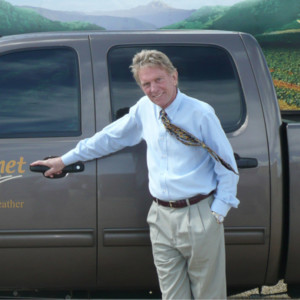
Starting out so many decades ago, you just wanted to do things that kind of fed your spirit, something that it, in some sense it chose you.
Leather is one of those natural fibers that was just always so compelling to me. There's just something that just called my name, if you will.
I'm Carrie Schwartz, saddle maker here in the mountains of Idaho, near the town of Salmon. And for now, over 4 decades I've been building custom made saddles and other leather work.
Back in 1971, my parents gave me the standard Tandy kit. So that that set me on a course of being so fascinated with leather, that all the aesthetic properties of it, like the color, the feel, the smell, the usability of it.
I developed an interest in horses, wasn't raised around horses, even though we had a farm growing up. So, we're leather and horses come together, of course, that's where saddles meet. Saddles are the supreme challenge in leather. That fusion of function and artistry has been so interesting to me. I'd always kind of had this artistic bent, the class artist if you will growing up and so to be able to express myself artistically in leather, it's been a big deal for me.
This is locally sourced beeswax. What this does is seals up these edges, kind of helps the leather to retain the oils. It also helps seal things off from the moisture and the elements of a stitched, the stitch line.
In the late 70s I worked in a gun holster shop in Twin Falls Idaho, and then a couple of different shops in Boise, as I went to school at Boise State. So then fall of 1982 I went to a, enrolled in a trade school in Spokane, Washington, and that's where I really learned the fundamentals of saddle making.
Before I finished up there in the spring of 1984 I’d already kind of cooked a deal with an older saddle maker who was willing to retire and I bought his shop and a little retail store here in Salmon. Joe Hoover a long time saddle maker, was in his 70s, late 70s as I recall. Just a little retail store, tiny little store up front. Had some tack bits, spurs. So yeah, in 1984 that was not uncommon, but nowadays, a main street business in a one-man shop like that s really, really hard to find. The vast majority of saddle makers are doing it full time, or serious part timers for that matter are like me, they're in a shop at home.
Of course, the internet has created a dynamic where the world comes to your door if you allow yourself that kind of visibility. Marketing has changed dramatically in that regard, for the better, really. It allows me to live where I want to live pretty much. I was married in and we moved the shop to our location where we live on our property and in a place at home.
We live here in Salmon. It's just still pretty ranchy. Change is coming, but it's coming at a much slower pace than many communities in Idaho, so I like that aspect of it. My goal was to have a shop in the mountains and be able to just go to work and build stuff and have a client base that can support that.
This oil is nourishing the leather in a way that will enhance its durability over time, especially with… exposed to the elements, heat, cold, wet, dry, all that kind of thing.
People come and commission me to make a saddle for them, but I also do quite a bit of accessory stuff. All of that stuff is custom made except for a show that I participate in at the National Cowboy Museum in the fall of the year and have been for now for the last 26 years or so.
I never had the goal or objective to become well known. That just seemed to happen on its own. I wound up in this group that got a lot of national attention, and it's all been fun, I'll be honest with you. It's been a lot of fun, but at the same time, my neighbor rancher here, he was giving me a hard time about being famous. And I said, Ed, you can't eat fame. I can't go down to the Saveway grocery store and say well... Here I am. And then expect to walk out of there with anything. So, it's gratifying from an ego standpoint, but it's really not going to do the things that actually building the stuff will do for me.
You know, I'm doing what a lot of people would consider a hobby, so I've made a hobby, a vocation, something that I've raised a family with. So, there's been tough times. Can't say that I was ever in real financial trouble, but it certainly wasn't easy. And finally, after these many years, it's gotten to be much more satisfying as far as financially.
My current pricing here in 2025 is, my base price is 7500 and that's a plain saddle. Don't make very many plain saddles. This one that we're looking at right now, current price for it is going to be in the 10,000 range, maybe a little more. Last year, almost one year ago we sold a saddle for 78,500. And that was not an auction, that was a priced piece. It had customized silver accouterments and decoration on the saddle. And of course, I had to pay a silversmith about 20 grand of that, 22 grand or something, and I had to pay a 30% commission. So, it's kind of like farming and ranching, you get this big calf check, and you feel good for about 24 hours. And then you've got to go pay off the line of credit. You've got to, you know, you've got materials costs that went into this, all of the things thatsurrounded that, that facilitated this sale. But just the same, I'm just thrilled that we sold that at that price.
I'm currently telling people I'm 6 to 8 years behind on my work, and that's at the rate that I'm going right now. I keep thinking every year, then I'm going to kind of start reorganizing and reconfiguring my schedule in such a way that I could get more saddles built in a years’ time, but I have yet to achieve that. Part of it, too, is I've been known for my artistry and well, you just don't build as many fancy saddles in a year's time as you do plain saddles. So, there's that. And most, a lot of people say, well, if I'm going to get a saddle from Cary Schwarz, it's going to be decorated. Fair enough, we can do that.