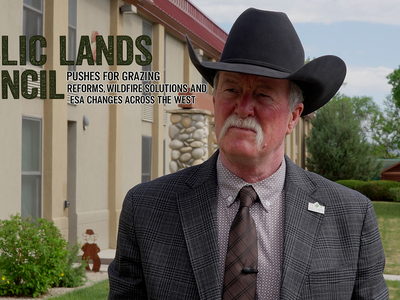


It was almost two years ago that Idaho Representative Butch Otter helped introduced a bill that would assure pack animals such as mules and horses would continue to be allowed on public lands & the so called "Right to Ride" legislation. The measure passed the House last September, but a Senate companion bill had not yet been introduced, until now. Idaho Senator Mike Crapo last week introduced a Senate version of "Right to Ride" along with the reintroduced measure in the House.
CRAPO: With so much of Idaho in the hands of the federal government, we need to insure that our local public land managers are preserving access to these lands.
One way to curb the devastating effect the Andean Trade Preferences Act has had on the Northwest asparagus industry is negotiating a new free trade agreement with Peru and neighboring countries. That is the highlight of a letter written by Washington Congressman Doc Hastings and recently sent by a group of U.S. Representatives from Washington, Oregon, and California to U.S. Chief Ag Trade Negotiator Allen Johnson. The A.T.P.A. of 1991 encouraged Andean countries to pursue legitimate agriculture instead of growing cocoa leaves for cocaine manufacturing. However, that deal has resulted in Peru becoming a low cost grower and shipper of asparagus, threatening the survival of Northwest asparagus growers.
The Bush Administration has notified the World Trade Organization that it plans to fully comply with the recent ruling against U.S. cotton subsidies. But perhaps the more significant question is not will the U.S. comply, but how? The U.S. has until July First to determine how it will comply with Step 2 and export credit programs for cotton production. And U.S.D.A. officials admit that the issue in and of itself is complex. How the U.S. handles the situation, as well as its agreement to comply with the W.T.O., will be of significant interest to other U.S. commodity groups who also benefit from government subsidies similar to those that were allowed cotton growers.
He says new technical guidelines will establish national priorities and help farmers and ranchers develop conservation plans for submission under federal financial assistance and conservation easement programs. What Natural Resources Conservation Service Chief Bruce Knight is talking about is new comprehensive policy for operating the Conservation Technical Assistance Program. C.T.A. is designed to help U.S.D.A. officials provide on-the-ground conservation assistance to customers, assisting their efforts to comply with programs such as E.Q.I.P. and C.S.P.